Bernoulli-Continuation Policy Learning
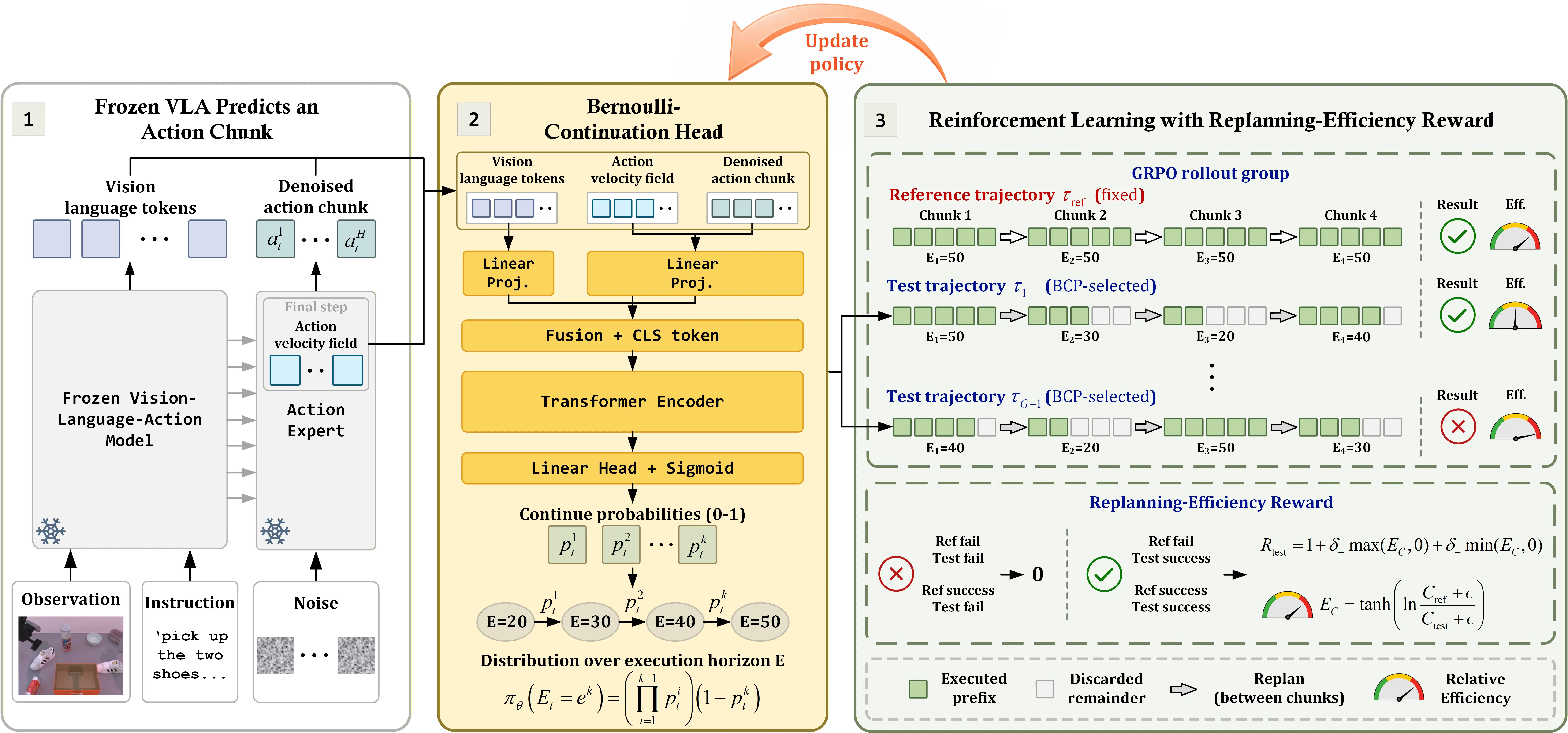
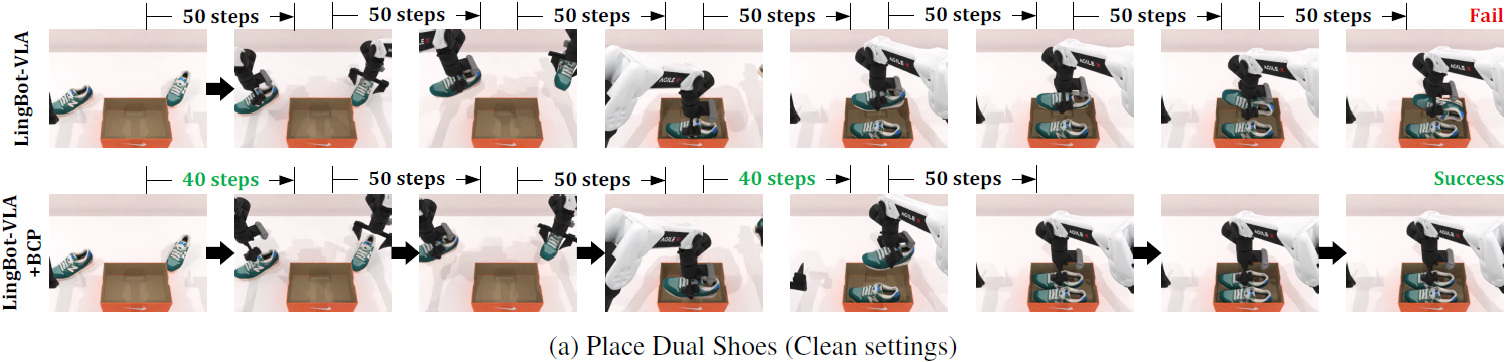
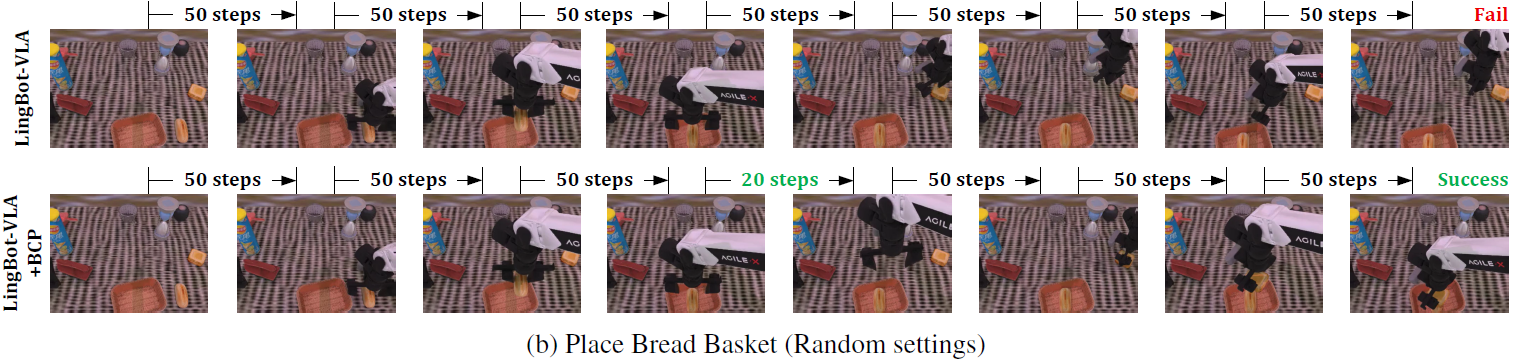
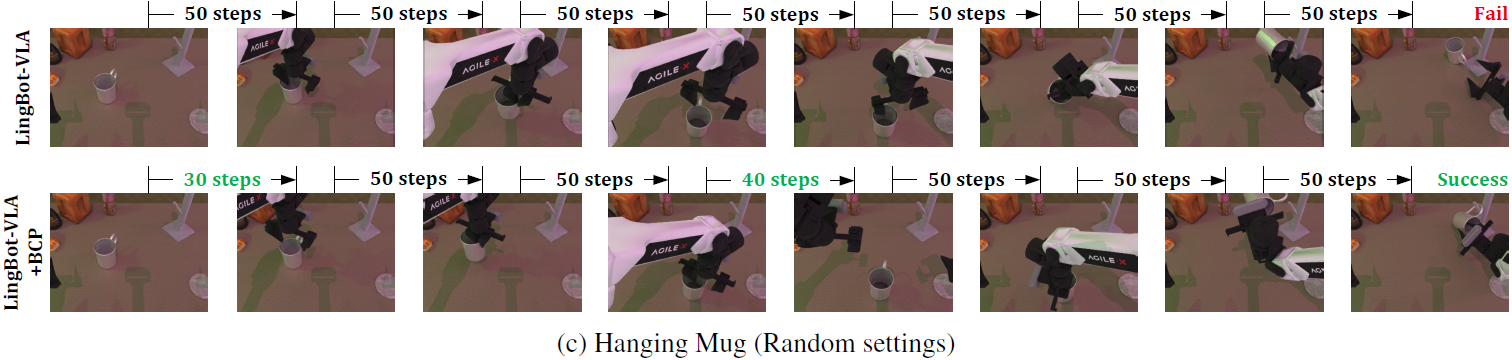
Our core idea is to replace fixed-horizon action-chunk execution with a lightweight Bernoulli-Continuation Policy that adaptively decides whether to continue or replan, aligning fresh observations with critical manipulation stages while preserving execution efficiency. Our contributions are summarized as follows:
- We identify replanning-timing misalignment as a key failure mode of fixed-horizon chunk execution, and formulate adaptive execution-horizon selection as a sequence of continue-or-replan decisions that captures the ordinal, prefix-sharing structure of candidate horizons.
- We propose the Bernoulli-Continuation Policy, a lightweight, plug-and-play framework that keeps the base VLA frozen and is trained with reinforcement learning from trajectory-level outcomes.
- We introduce a Replanning-Efficiency Reward that jointly encourages task success and execution efficiency, preventing the policy from collapsing to unnecessarily short horizons.
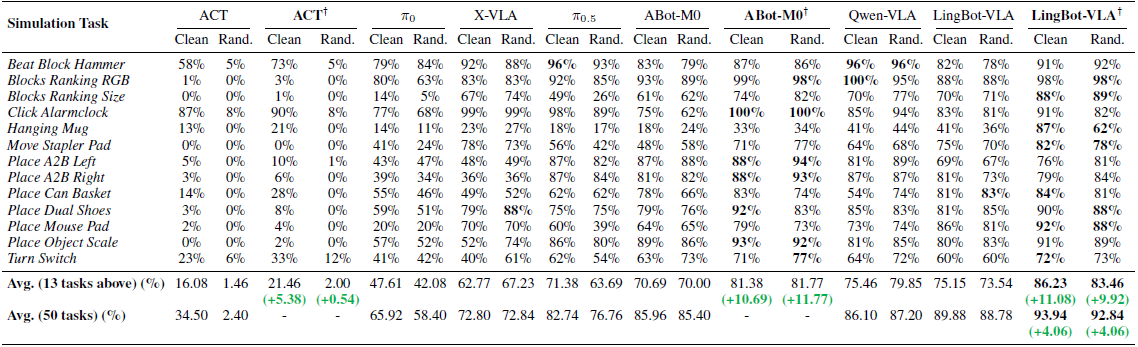
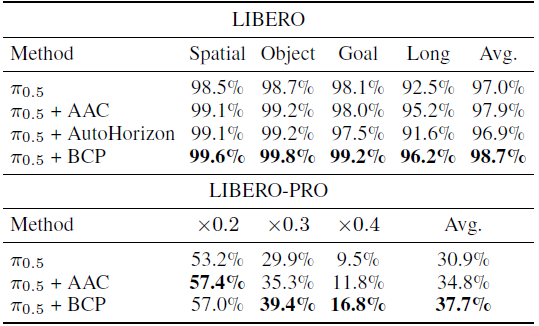
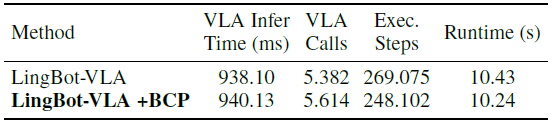
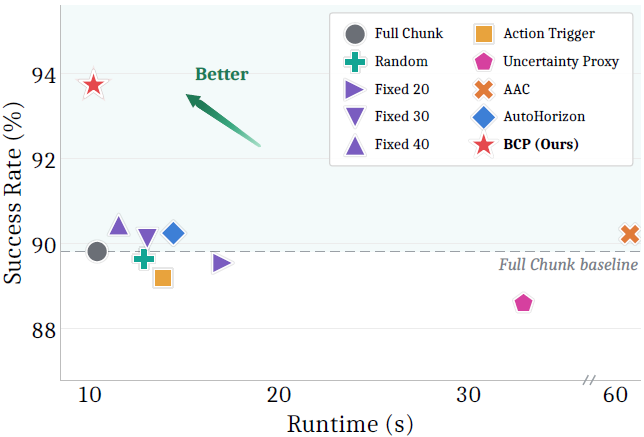
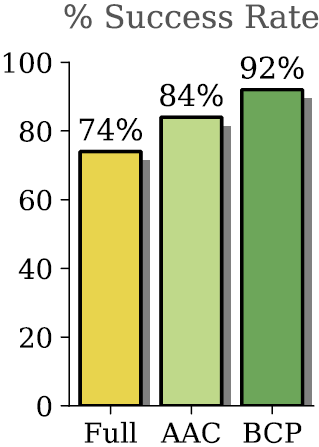
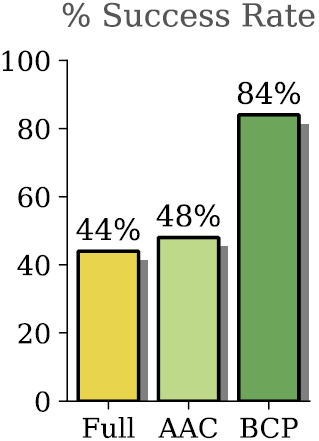
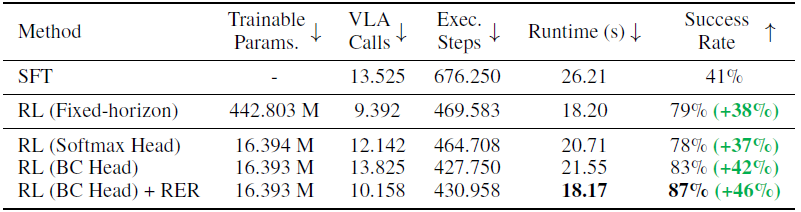
- We demonstrate on RoboTwin 2.0, LIBERO, and real robot that BCP achieves better performance than baselines, generalizes to Randomized settings, and preserves the runtime efficiency of action chunking.